Part B Premium Reduction Centers for Medicare & Medicaid Services (CMS)
May through March 2026OVERVIEW
Informing beneficiaries of a Medicare Advantage Part B premium cost-saving benefit.The Centers for Medicare & Medicaid Services (CMS) is the federal agency that provides health coverage to more than 160 million through Medicare, Medicaid, the Children's Health Insurance Program, and the Health Insurance Marketplace. The Medicare Coverage Tools (MCT) 2.0 program supports CMS in modernizing parts of the Medicare website, including the Medicare Plan Finder (MPF), cost data, support channels, and other coverage tools. MPF helps Medicare beneficiaries, their families and caregivers explore, compare, and enroll in Medicare plans.
PROJECT BACKGROUNDFor beneficiaries that consider enrolling in a Part C (Medicare Advantage) plan, there may be a variety of factors that go into their decision process. Customers may look at doctor and facility networks, comprehensive cost structure, prescription drug coverage, and benefit offerings such as whether a plan offers dental, vision, fitness or other allowances and cost savings.
When opting to enroll in a Medicare Advantage (MA or MAPD) plan, beneficiaries must pay the plan premium and continue paying their Part B premium - the monthly cost paid for the medical insurance part of Medicare which helps cover doctor visits, outpatient hospital care, preventive services, lab work, durable medical equipment, and home health care. Some Medicare Advantage plans offer a Part B premium reduction benefit that can lower the monthly amount a beneficiary pays for their Part B premium.
Medicare pays private insurers a set amount per enrollee, so when these plans spend less than that amount on benefits, they can return the difference to members as a Part B premium reduction, additional supplemental benefits, or by lowering cost-sharing such as copays or deductibles. The Part B premium reduction route appears as a higher Social Security check if the beneficiary's Part B premium is normally deducted there or if they pay Medicare directly, it will result in a lower bill or credit.
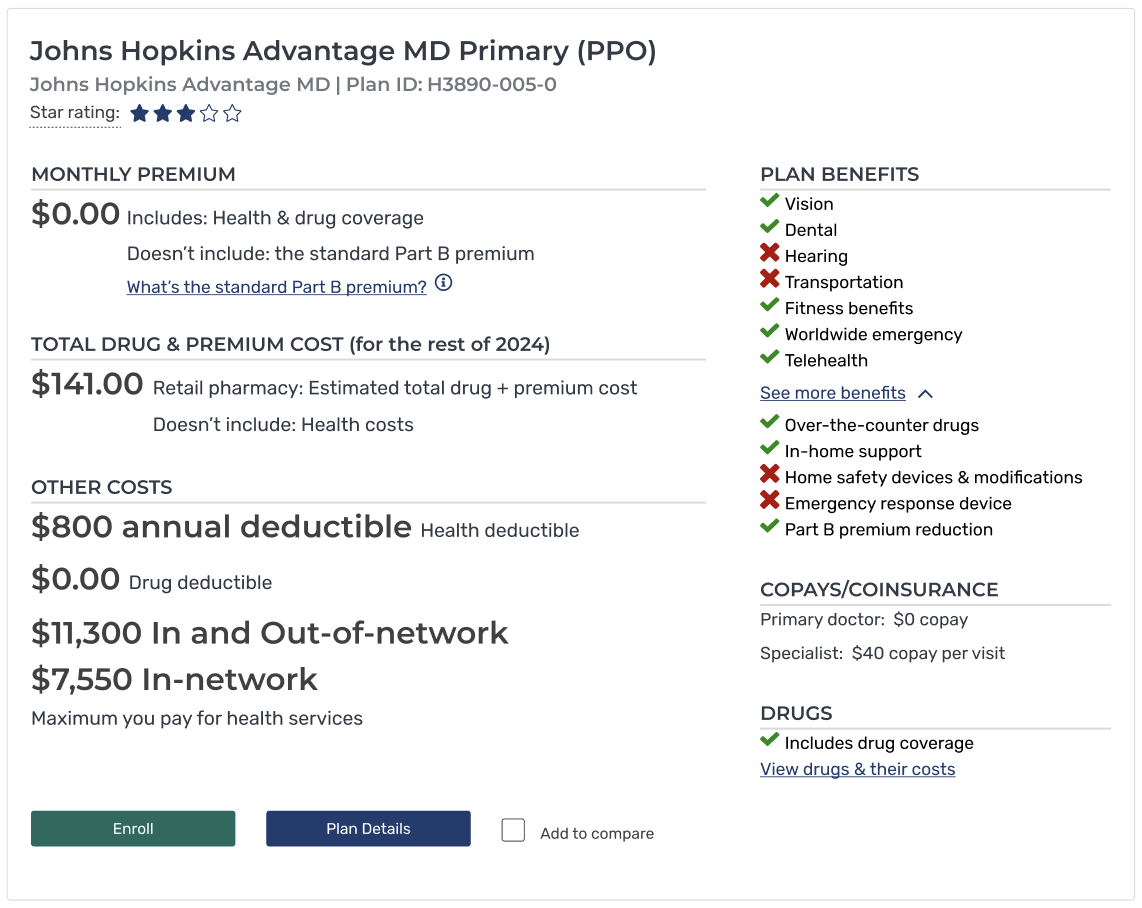
- Medicare Plan Finder users were not shown how much a Medicare Advantage plan reduces their Part B premium, if offered by the plan, making it harder to understand potential savings when looking to enroll in a plan.
- CMS does not release the updated standard Part B premium until after their Open Enrollment Period has already begun, creating beneficiary frustration around not having updated information while making enrollment decisions for the upcoming year.
- Ensure beneficiaries know what the standard Part B premium is, how it can vary, and how some plans can offer a Part B premium reduction to offer a cost-savings benefit.
- Clearly display Part B premium reductions for Medicare Advantage plans to users while ensuring transparency and accurate alignment with CMS's annual Part B premium updates.
- CMS - Centers for Medicare & Medicaid Services
- CY - Coverage Year
- MA - Medicare Advantage (Part C)
- MAPD - Medicare Advantage Prescription Drug (Part C)
- MCT - Medicare Coverage Tools
- MPF - Medicare Plan Finder
- OE - Open Enrollment
- PBP - Part B premium
- PBPR - Part B premium reduction
- PDP - Prescription Drug Plans (Part D)
- SPBP - Standard Part B premium
OUR APPROACH
:: Concept Development ::
UX discovery
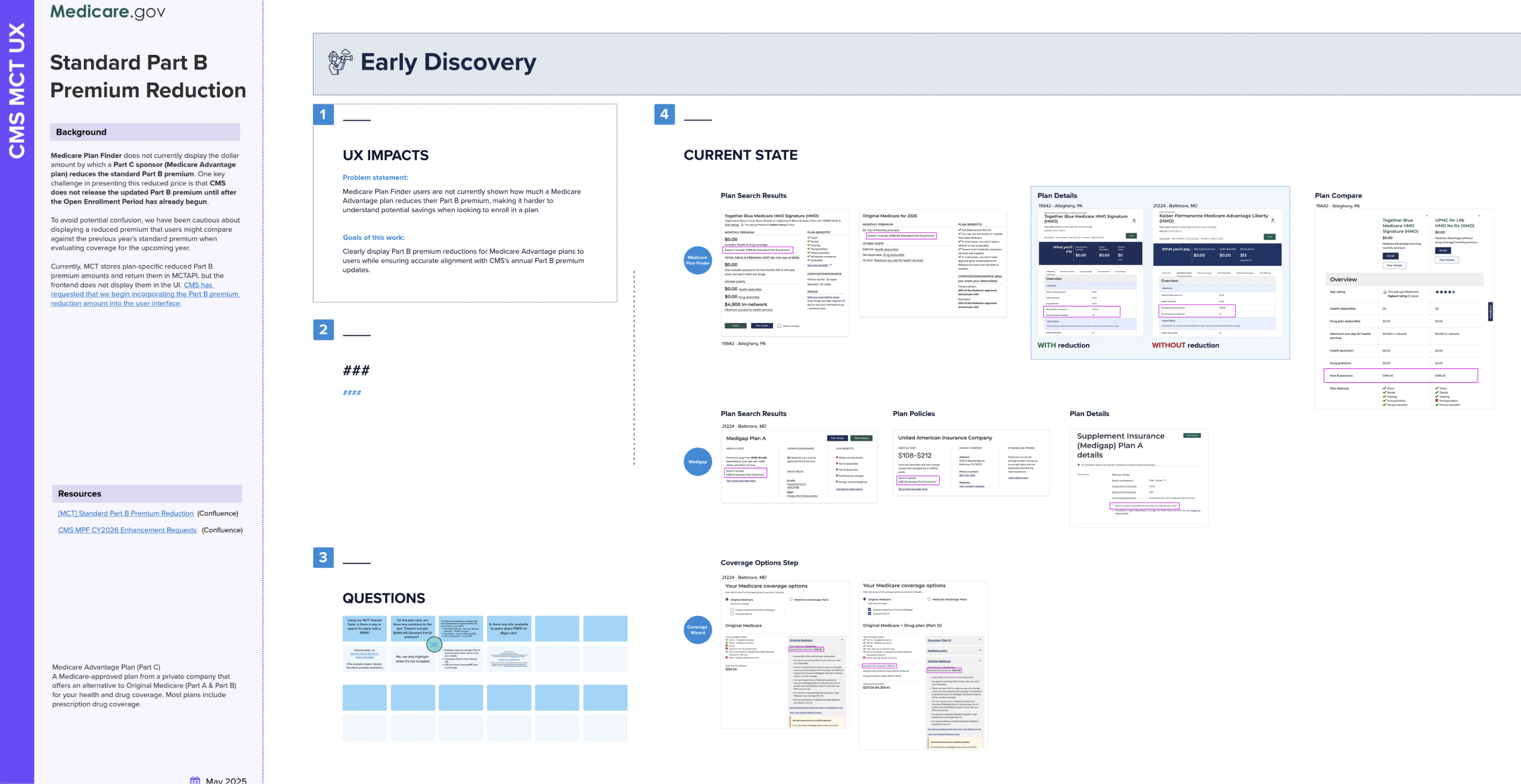
MCT launched a discovery process to begin aligning on a design strategy.This project began with the creation of a grounding brief by our MCT Product Data team lead, capturing background information, a statement of the requirement, the MCT team ask, and any relevant information such as collaboration dependencies, data structures, linked work in progress, etc. UX discovery began with absorbing this information and beginning to capture baseline information and a deeper exploration to have a full understanding of the current state, key challenges, and project goals.
-
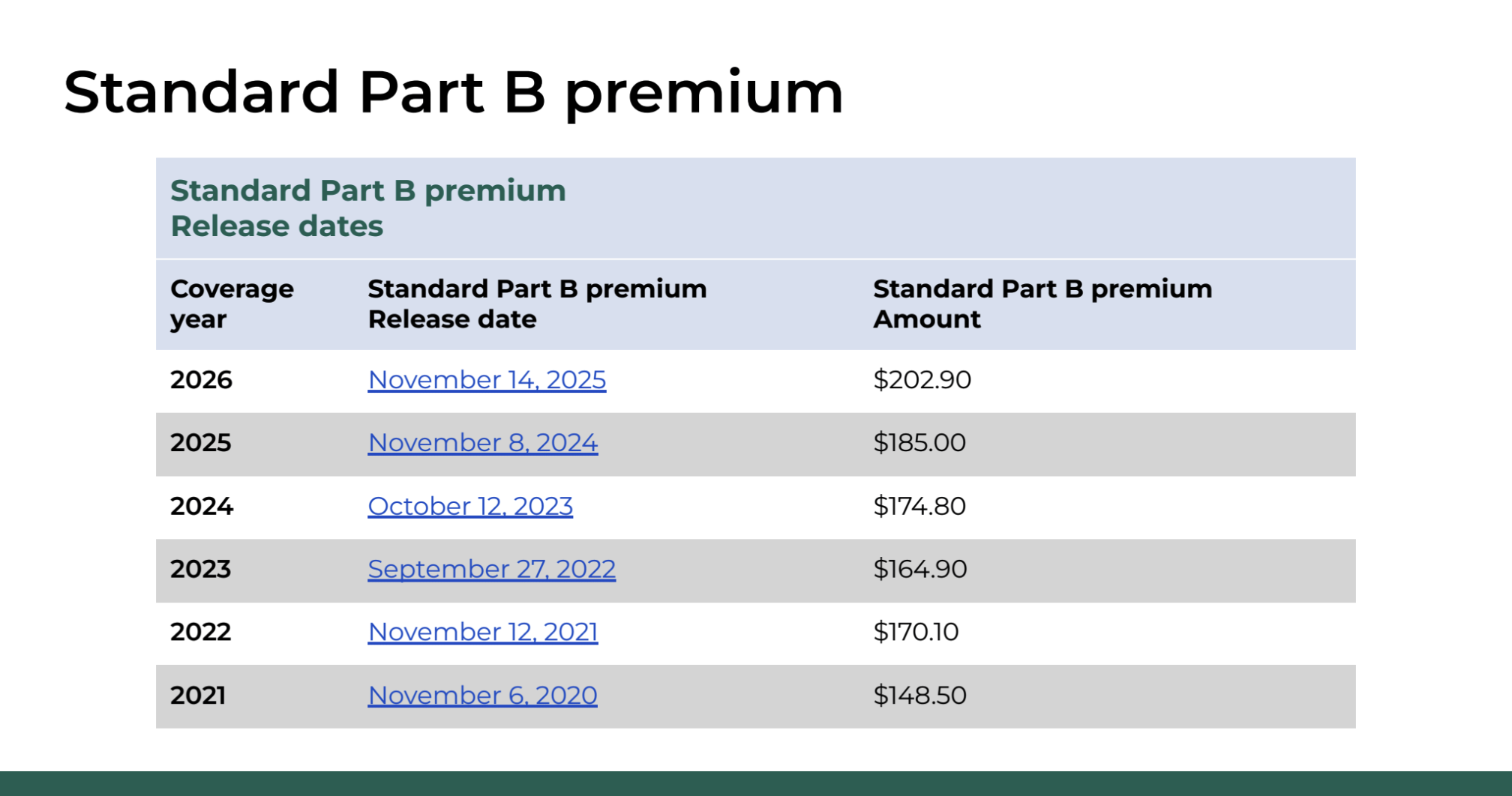
In 2025, the standard Part B premium (SPBP) was $185.00 USD per month. This amount can change each year and the amount a beneficiary pays could vary from the standard amount depending on the beneficiary's income, whether they get other help with costs, have Medicaid, or are enrolled in a plan that offers a Part B premium reduction benefit.
- CMS calculates Medicare's SPBP using a statutory formula mandated by the Social Security Act. Various components go into determining the SPBP amount such as the statutory 25% rule, required reserve adjustments, key cost drivers analyzed by actuaries, and statutory safeguards such as the “Hold Harmless” provision, which prevents Social Security benefits from decreasing year-over-year due to an increase in Medicare Part B premiums.
-
On average, CMS releases the SPBP for the next coverage year in mid-November, well after OE for beneficiaries has begun.
-
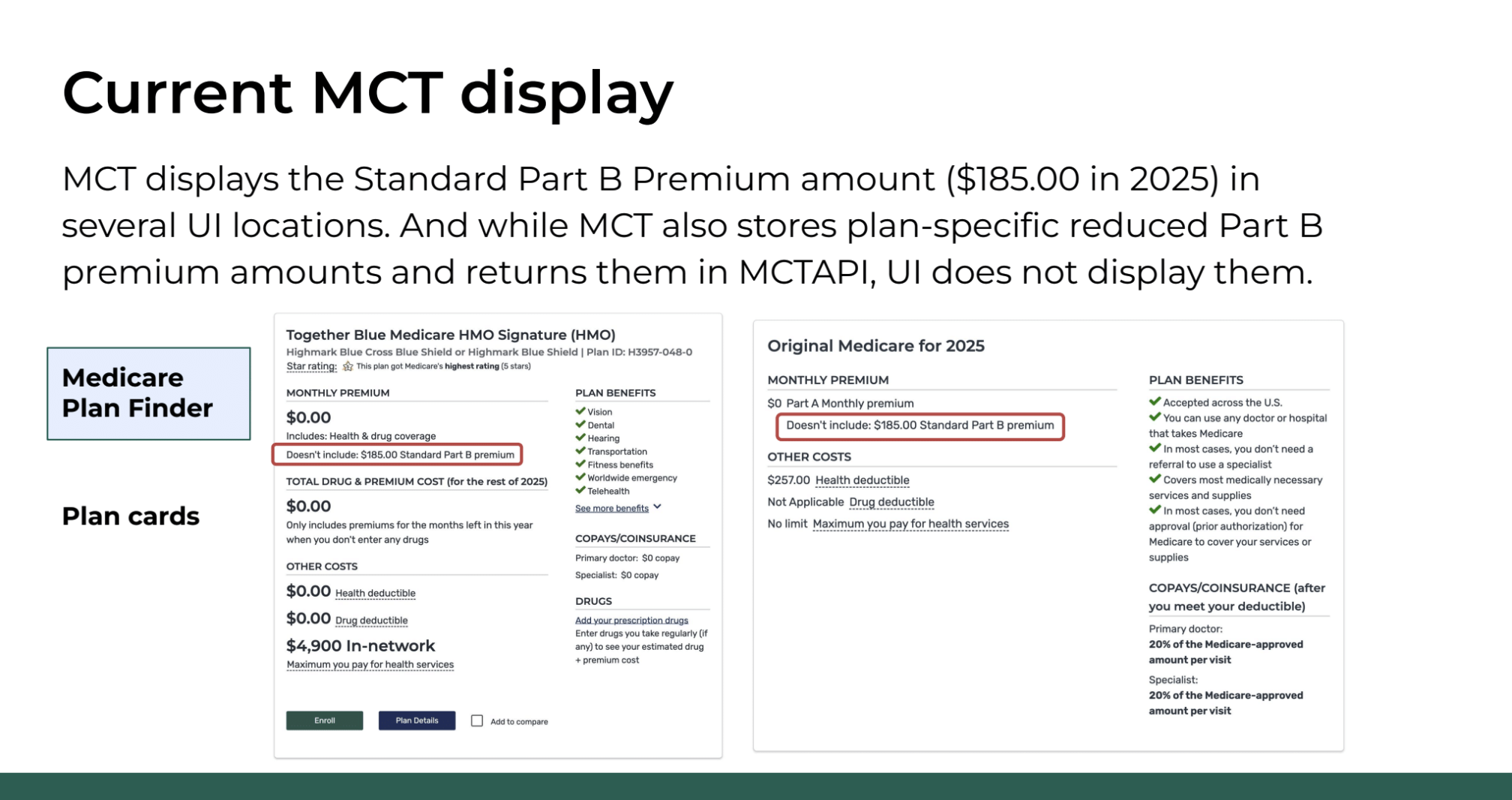
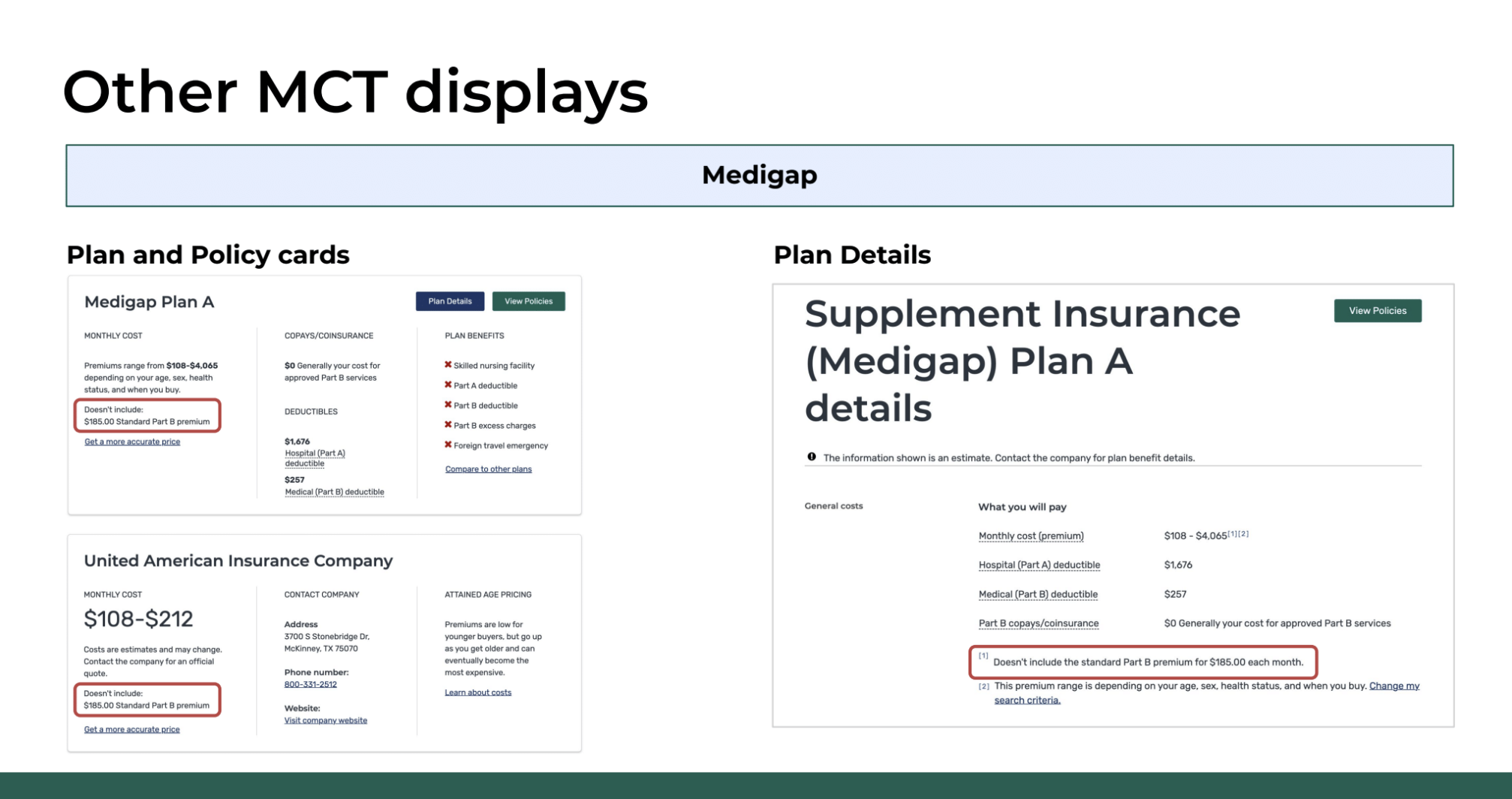
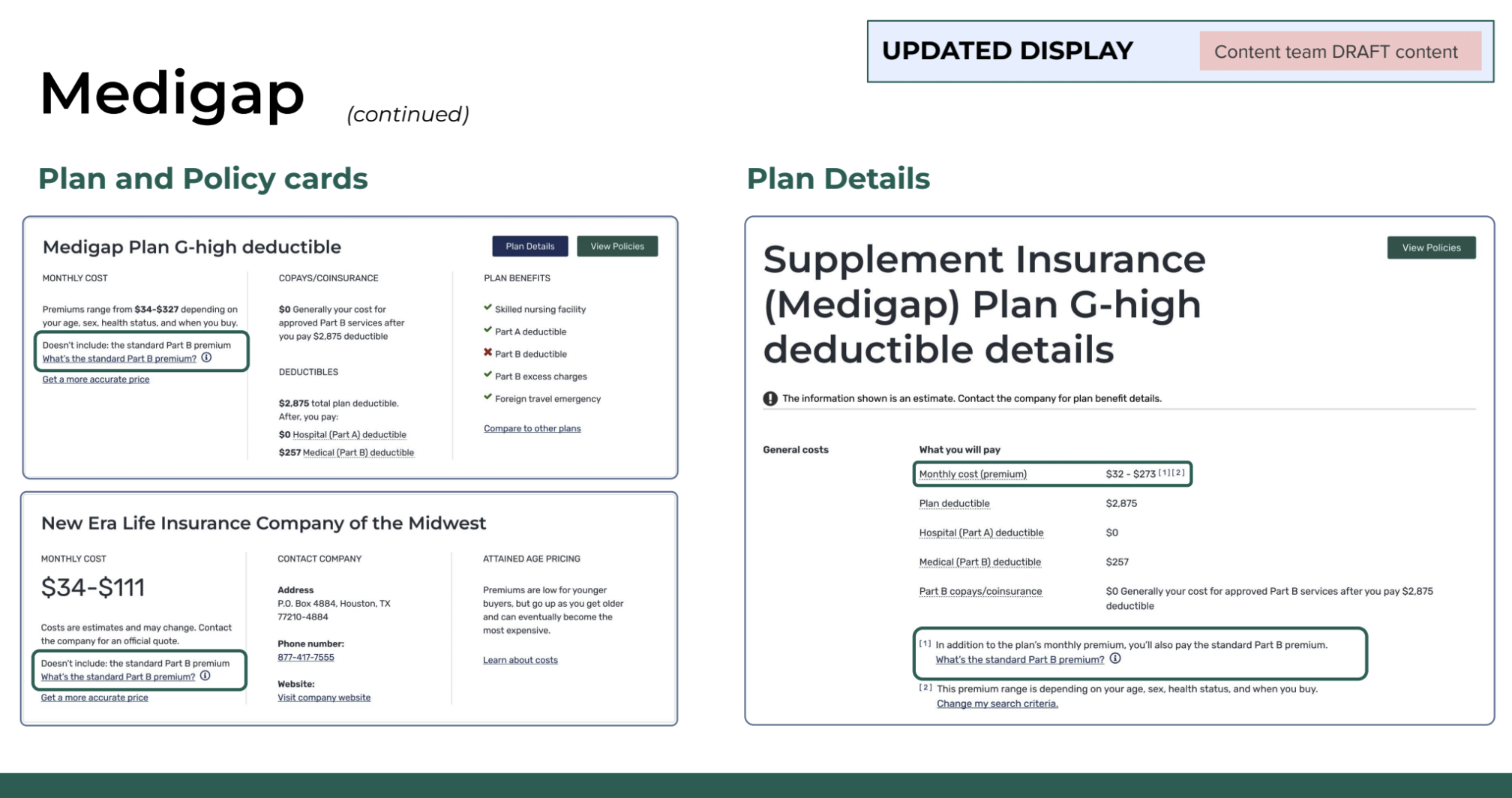
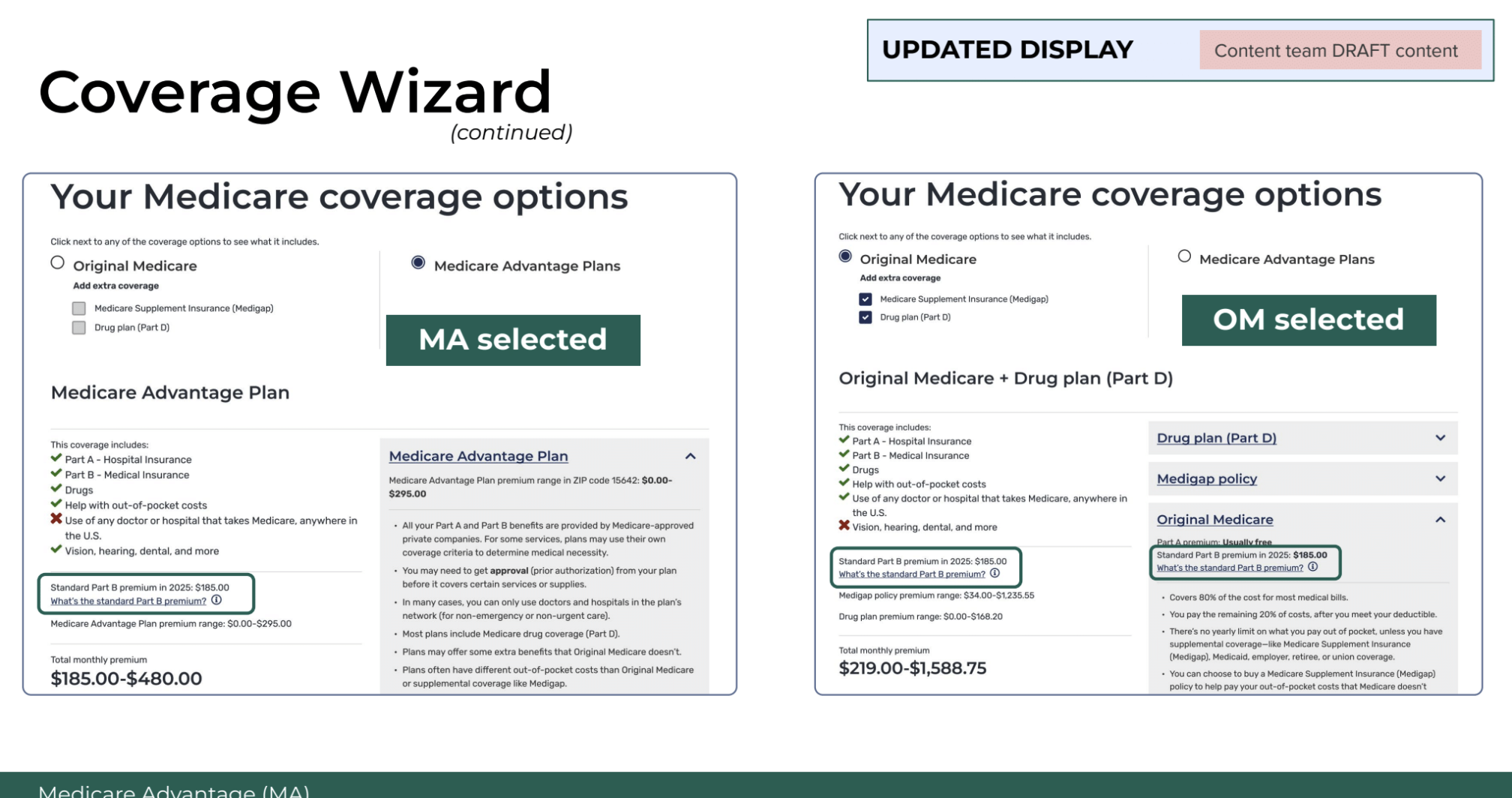
MCT displays the SPBP in several locations including on various MPF pages, and in the Medigap and Coverage Wizard tools.
-
Only Part C (MA/MAPD) plans are eligible for the Part B premium reduction. Part D plans are not eligible for the PBPR benefit.
-
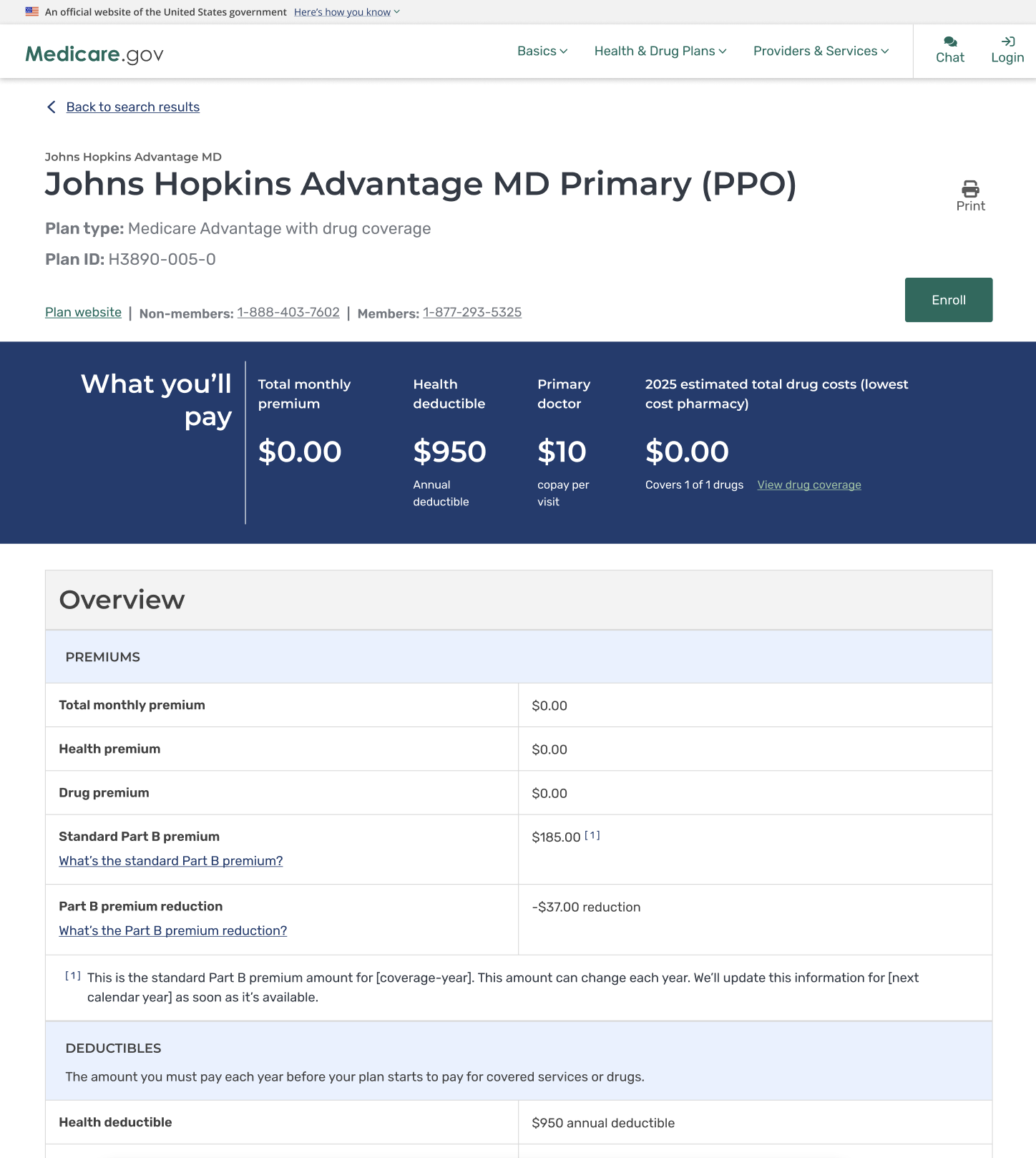
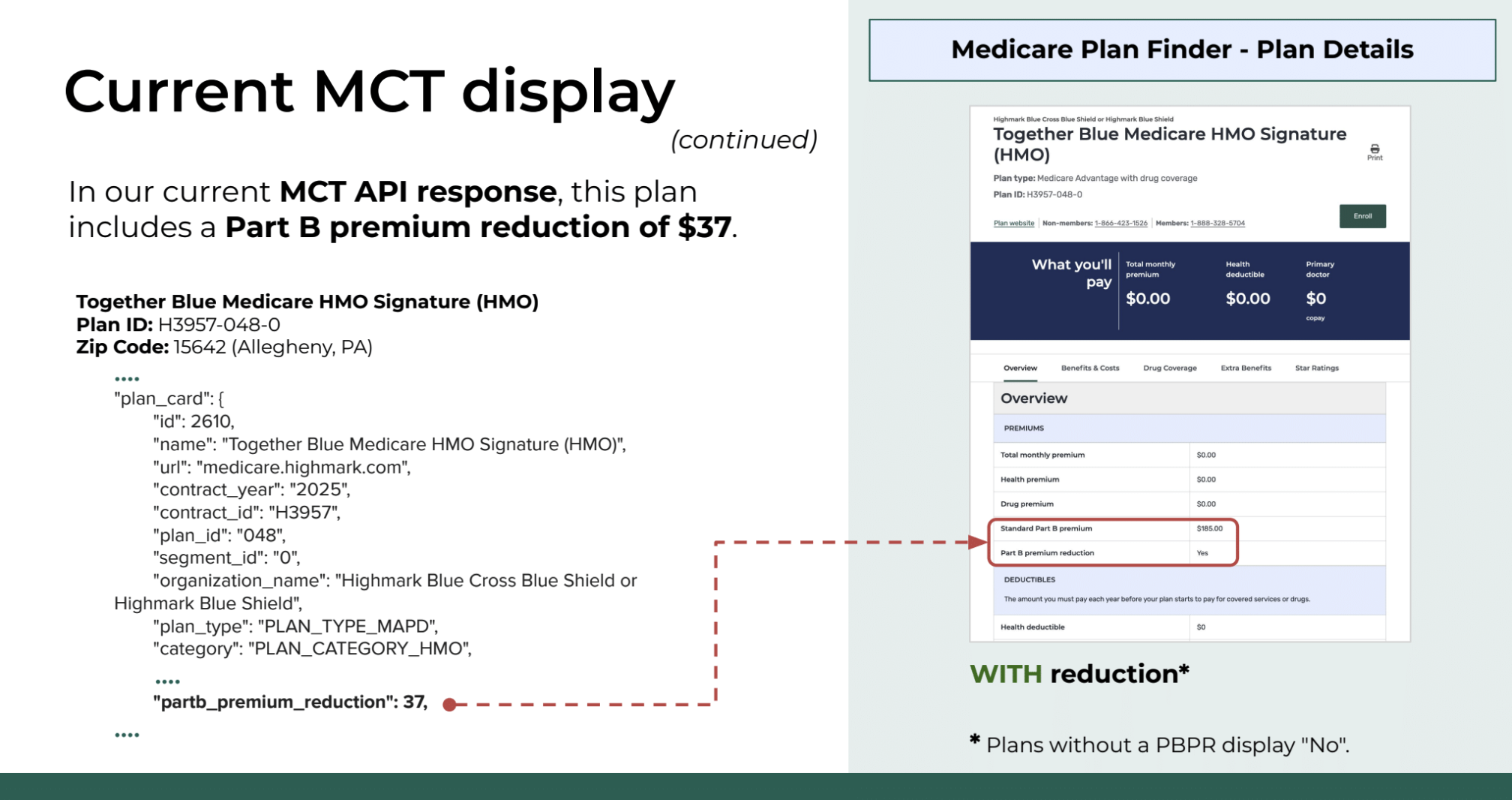
On the technical side, MCT stored plan-specific Part B premium reduction amounts and returned them in their API, but the front-end did not display them in the MPF UI.
- To avoid potential confusion to users enrolling in a plan for the next year, MPF did not display plan specific Part B premium reduction amounts that users might use to calculate their expected Part B premium against a displayed SPBP that had not been updated for the upcoming year.
-
MPF displayed the benefit only on the Plan Details page view of Medicare Advantage plans with a 'Yes' or 'No' value to notify beneficiaries whether or not the plan offered the benefit.
Comparative analysis
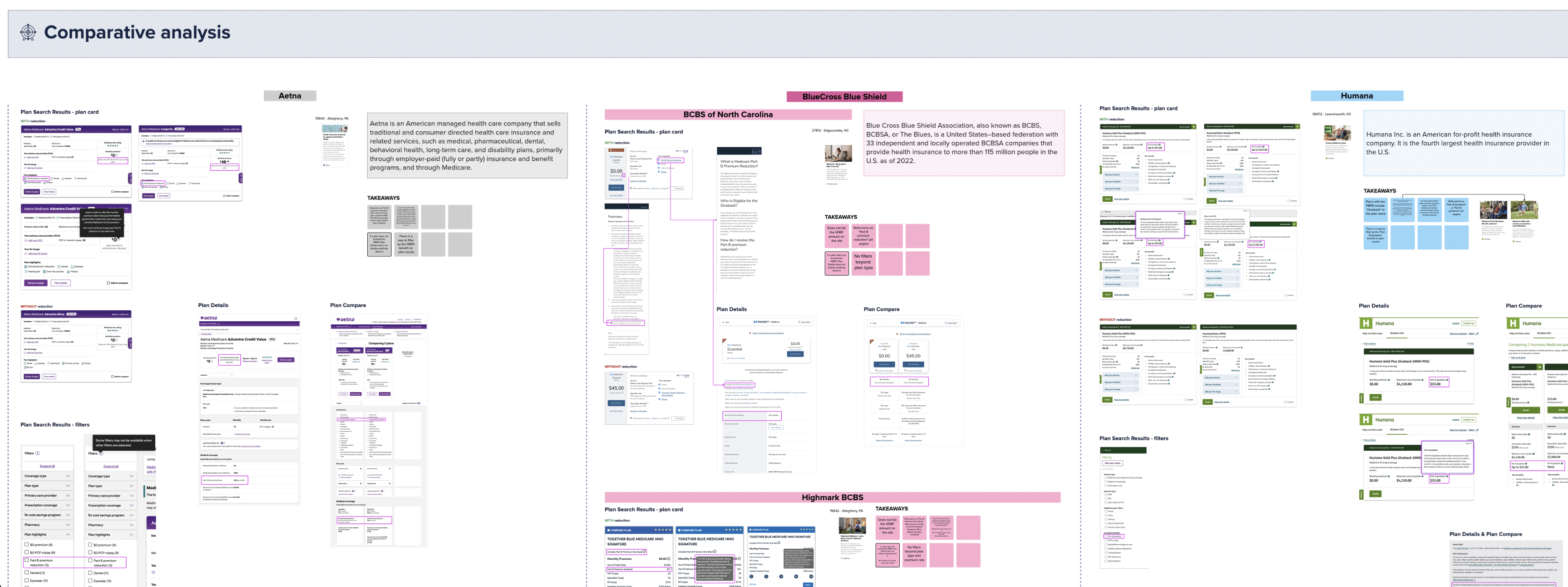
Evaluating key provider SPBP and PBPR benefit details.A representative sample of Medicare Advantage provider sites were examined to assess how they presented information on the SPBP and the PBPR during plan search and comparison.
-
Most providers don't explicitly list the SPBP amount in any plan-specific areas, like on their plan cards in plan search results, plan details, or plan comparison.
-
Some providers include a note to users near the plan's monthly premium amount or in a footnote area that the beneficiary will need to continue paying their Medicare PBP in addition to the plan's monthly premium.
-
Some providers include a way to filter plan search results by the PBPR benefit.
-
Providers often refer to the PBPR with different terms, such as "reduction", "giveback" or "buy down".
-
Most providers make some reference to the PBPR on their plan cards in plan search results for plans that include the benefit.
- For plans that don't include the benefit, there is usually no reference to it on the plan search results view. The exception is its inclusion on the plan comparison view.
-
Providers always list the PBPR exact amount, if applicable, on their plan details and plan comparison pages.
Analytics synthesis
Taking a look at the plan benefit numbers.The MCT Analytics team took a look at all MA and MAPD plans in our plan database, and enrolled in MA/MAPD plans during the Open Enrollment (OE) period for coverage year (CY) 2025 (October 15 through December 7, 2024).
- Some specific plan and enrollment data unable to be disclosed.
-
Most MA/MAPD plans offer no PBPR benefit.
- Of the top 500 plans with the most enrollments, most offered no PBPR.
-
The average PBPR amount offered by MA/MAPD plans was about 8% of the SPBP.
- Most of the plans offering the PBPR benefit offer an amount less than the average.
-
For the top 10 zip codes of enrollments during OE CY 2025, the average PBPR amount offered was 11% of the SPBP - more than the average PBPR amount offered by all MA/MAPD plans with the benefit.
Qualtrics user sentiments
Understanding how beneficiaries perceive and experience the giveback benefit.Using Google's Gemini AI tool to take a look at Qualtrics site-wide survey open feedback data from May 1, 2024 to April 30, 2025, there were 92 comments related to the PBPR.
Users who referred to the PBPR using the term "giveback". Other terms used included "Part B premium reduction" and "payback"/"pay back".
Users who cited wanting to see a specific amount listed for the PBPR benefit for a plan.
Users who expressed interest in having a way to filter to find and compare plans that offer the PBPR.
Users who would like to be provided with more information on the PBPR benefit.
Project alignment
Unifying the product vision.Equipped with the information obtained from this discovery and analysis, there was an opportunity for additional stakeholder open discussion and alignment on next steps. This was also a chance for Engineering to get a high-level look at the recommendations and determine if there were any blockers or potential problems with implementation as described.
-
The majority of our MA plans don't offer the reduction. Are there any updated leadership considerations that we should have here with moving forward? Is CMS still aligned with this as a priority ahead of OE this year?
-
Is there any required language that needs to be communicated for any of these reductions?
-
There is variation in the SPBP amount based on income. Users with a higher income (over $106,000), have a higher PBP they're responsible for. Is there consideration that should be given to providing this info?
-
We have limited information on the Medicare site about the PBPR. Would it be worth it for the CMS Content team to explore creating more info around this elsewhere on the site and in Medicare beneficiary documents (Medicare and You handbook, etc.)?
-
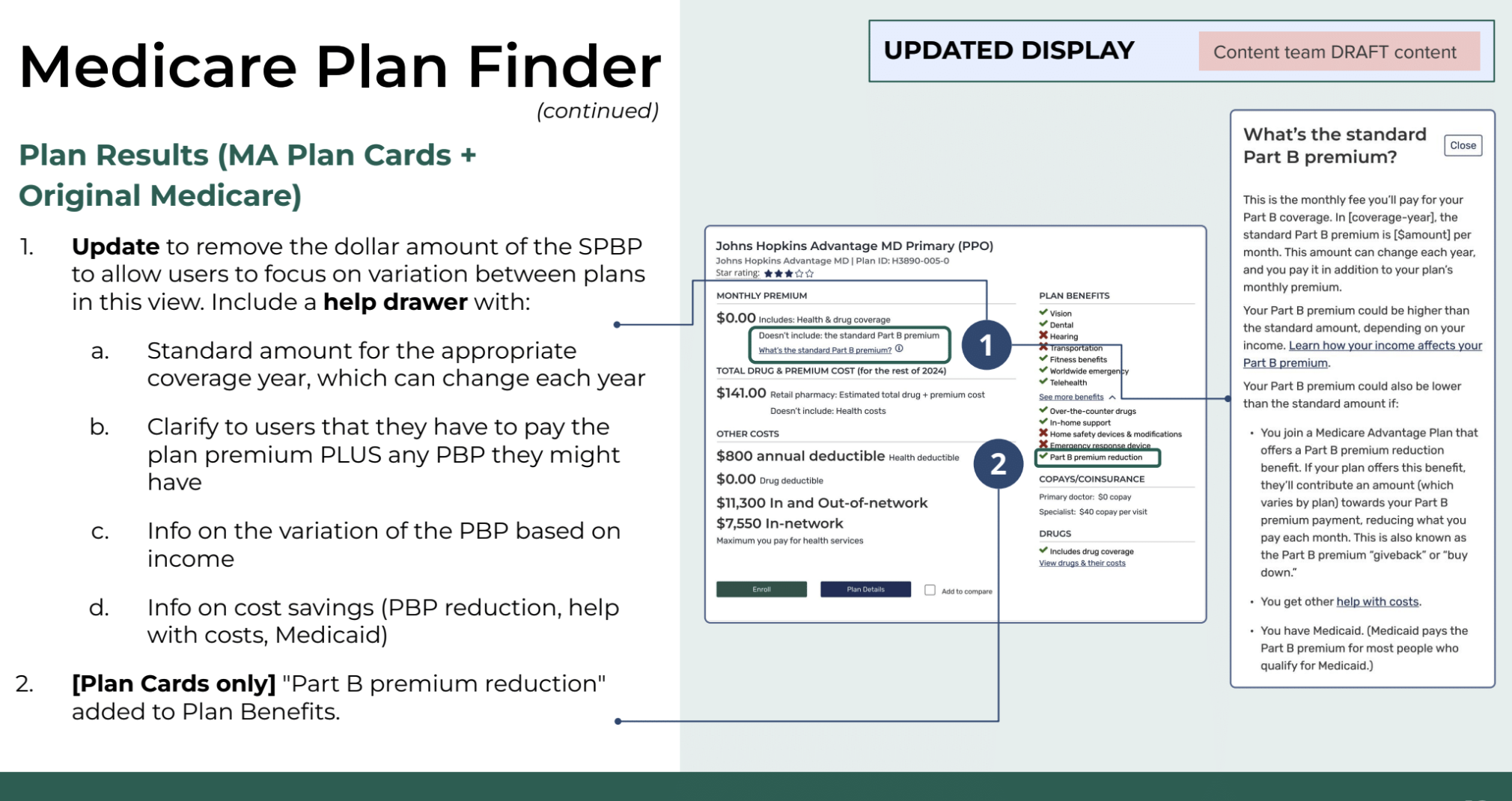
Make it clear to users that they will need to continue paying their Medicare Part B premium in addition to the plan's monthly premium.
- Alter the current content that appears near the monthly premium cost - “Doesn't include: $185.00 Standard Part B premium” - to reflect clearer plain language - “plus any Part B premium you may pay”.
This language was later not approved by the Content team. - Include information about what the Standard Part B Premium amount is for the relevant year and how it can vary based on income or help with costs the beneficiary currently gets.
- Ahead of receiving the updated SPBP amount for the next coverage year, clarify to users that the displayed SPBP amount is for the current coverage year, and that the amount will be updated for the next coverage year when available.
- Alter the current content that appears near the monthly premium cost - “Doesn't include: $185.00 Standard Part B premium” - to reflect clearer plain language - “plus any Part B premium you may pay”.
-
Add the Part B premium reduction benefit to the plan card “Plan Benefits” list on plan search results so that users can clearly see whether or not a plan offers the benefit.
-
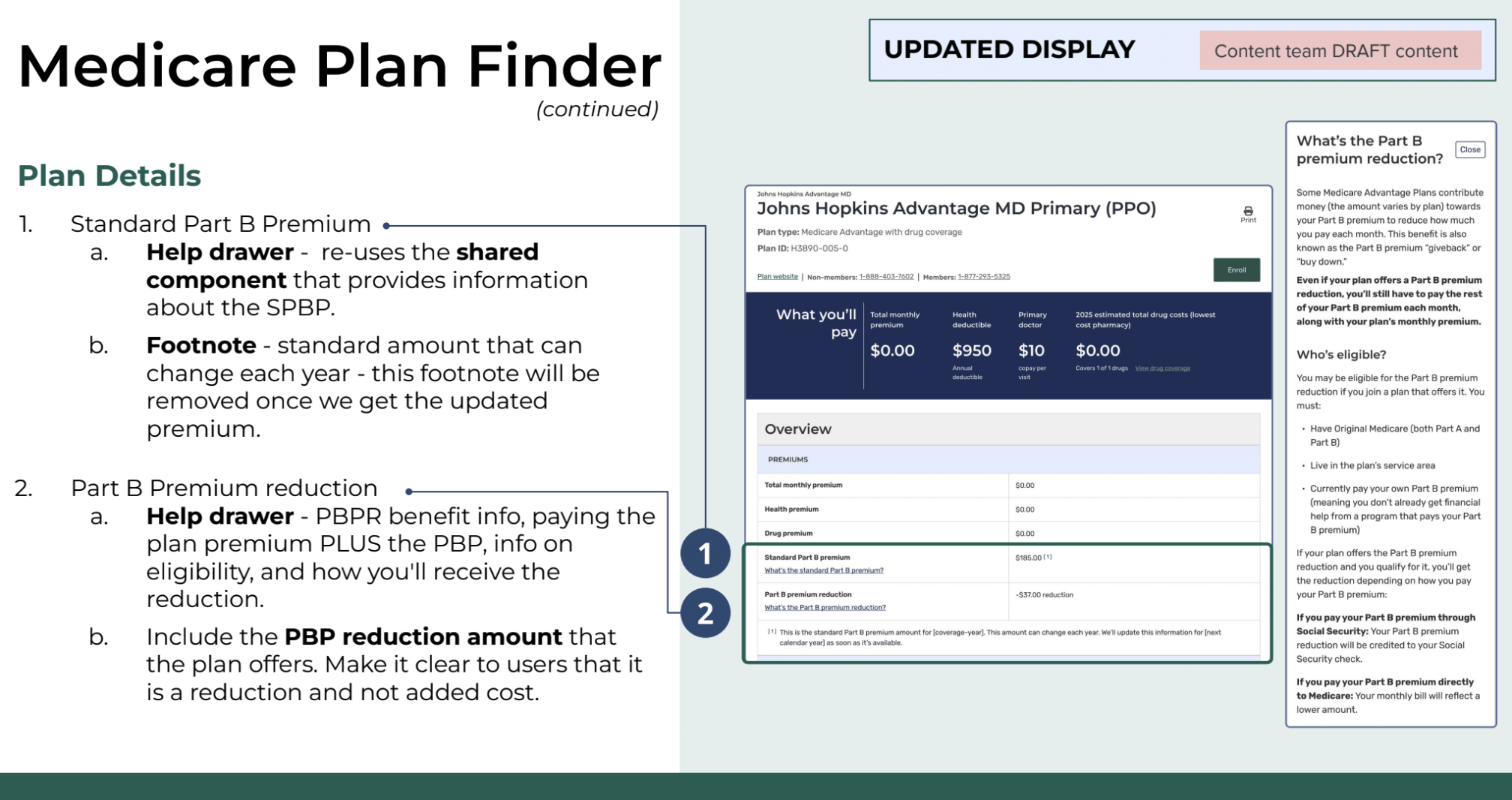
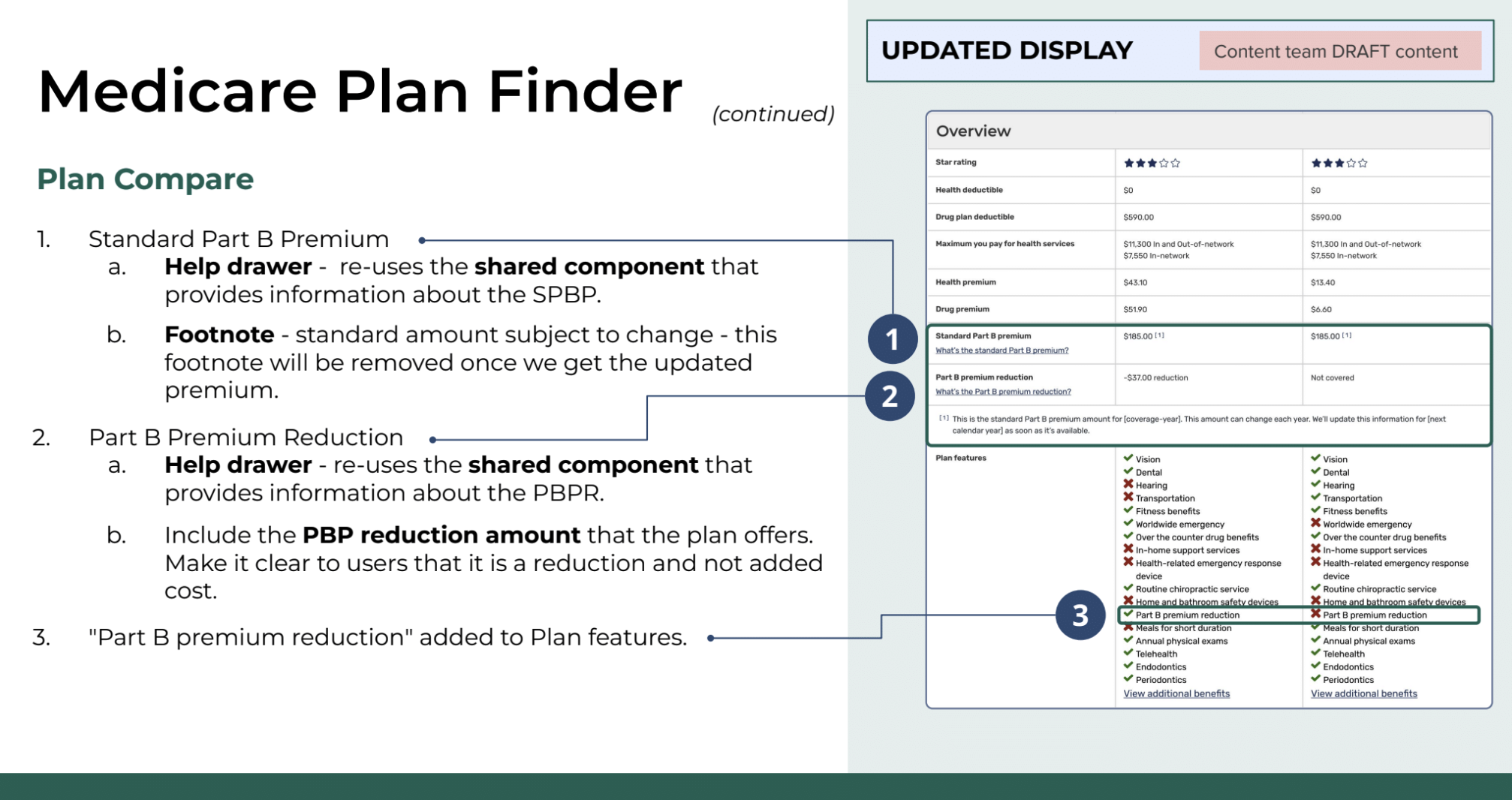
When available, transparently display the Part B premium reduction amount specific to a plan on the plan details and plan compare pages.
- Include information about the PBPR benefit and how it works.
:: Stakeholder buy-in, Implementation, & Testing ::
To ensure consensus on moving forward, MCT shared the overall recommendations with broader CMS groups and leadership for approvals. At this time, MCT also began the process of engaging the CMS Content team with a formal content request submission.
The MCT UX team proceeded to go through specific requirements for implementation with the MCT Engineering team in preparation for upcoming sprint work. During this discussion, engineers have the opportunity to think through the solution and ask questions as they arise. There is typically a checklist of items that the teams go through to make sure the work can be completed. For example, ensuring that the engineering team has access to any design files and annotations, making sure that different variations/states have been accounted for, and determining if any feature flags are needed.
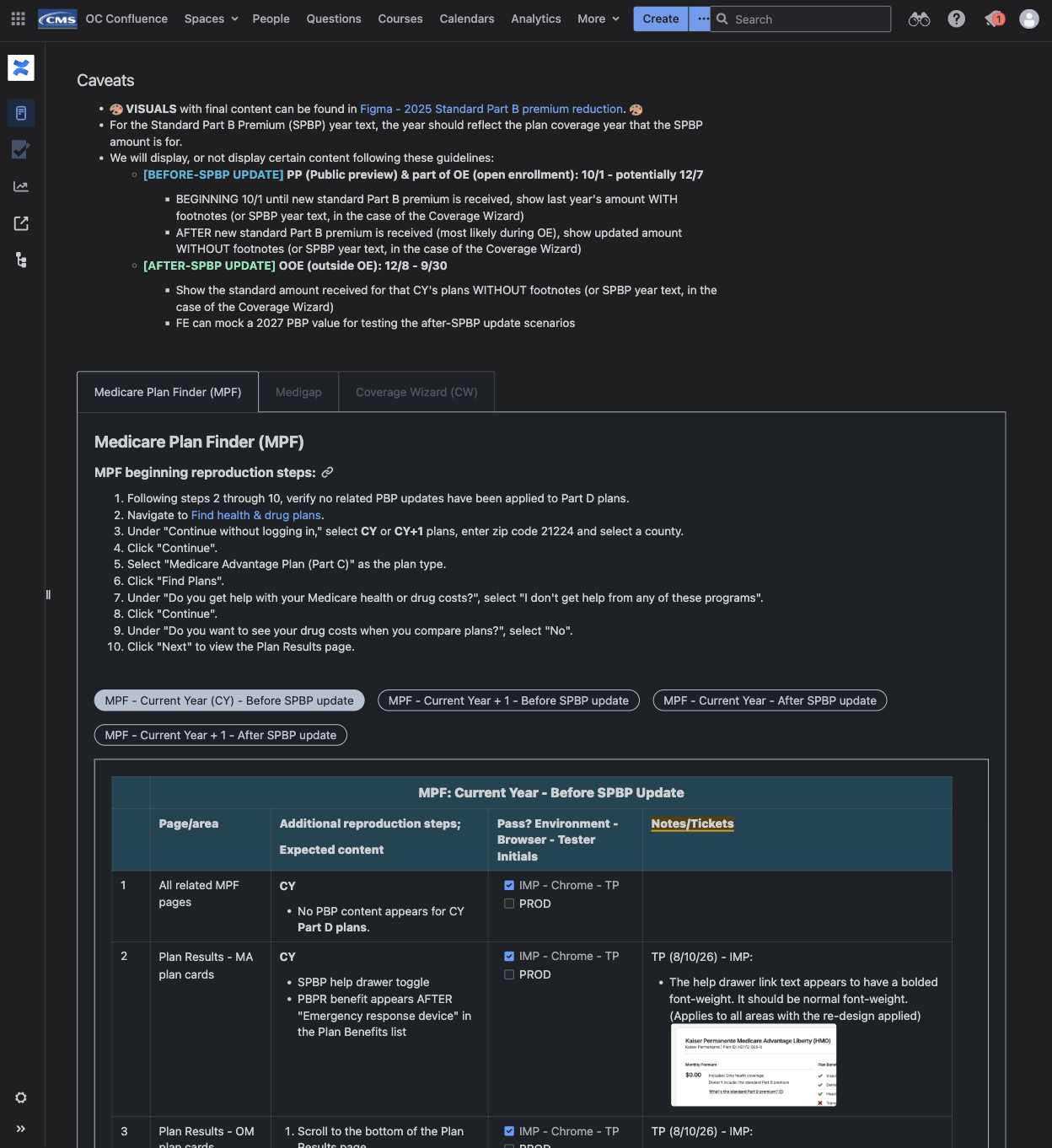
While the Engineering team was preparing to work on this project, a test plan was created capturing each scenario variation that will need to be tested during the QA process post-implementation.
:: Post-release analysis ::
A comprehensive overview of a post-release analysis of the 2025 Part B premium reduction work.Research and Qualtrics feedback from Public Preview and OE 2025
Includes a look at findings from end-to-end research completed by the CMS Department of Research.
-
There continues to be some frustration around not knowing the SPBP amount for the next plan year at the beginning of OE while viewing plans.
-
Users are interested in having a way to filter plans to see those that offer a PBPR.
-
Some users missed the SPBP related help drawer toggle.
-
Users found it helpful when seeing the PBPR amount listed.
- In 2025 OE end-to-end research synthesis, no participants clicked on the PBPR help drawer toggle.
-
A few users noted that the amount of the PBPR, when offered by plans, is low and oftentimes $1 USD.
-
Users expressed interest in wanting to see simpler explanations to understand how Part B works, including:
- What the phrase “Doesn't include: the standard Part B premium” means.
- How the PBPR works.
- What the Part B deductible is.
Analytics - through March 2026
- Most MA/MAPD plans still do not offer a PBPR as a benefit.
- The Standard Part B premium (SPBP) for CY 2026 was $202.90. Of the plans that do offer the reduction, the average amount is $17.17 - 8.5% of the total SPBP.
- From CY 2023 to CY 2026, the 'value' of the PBPR or the average amount of savings on the total SPBP has increased from 6.4% to 8.5%.
In summary
While the increased visibility of the Part B premium reduction is recognized as a clear data point, the data and user feedback point to a few usability issues and points of confusion.
Accurate alignment with CMS's annual Part B premium updates was included with this update, but many users find it challenging to efficiently look for a plan for the next year when the Part B premium for the next plan year is unknown.
The majority of MA and MAPD plans don't offer a PBPR. Most plans that include the Part B premium reduction offer a dollar amount reduction that is less than 9% of the Part B premium, leaving beneficiaries questioning its value as a benefit.
Future Considerations
Where do we go from here?- Re-evaluate when CMS releases the next coverage year's SPBP amount with any other current agency dependencies, statutory formulas, and current provisions. Consider all of the moving pieces that are needed to shift the updated SPBP release to a time period ahead of public preview, so that beneficiaries are able to make more informed decisions at the same time as they are able to see next year's plans.
- Explore updating content related to the SPBP and PBPR with more plain language.
- Include a way for users to filter plans with the PBPR benefit in order to easily identify additional cost-savings during plan selection.
- Evaluate the location of the PBPR benefit on plan details - Overview section versus the Extra Benefits section.
- Further analyze the distribution of PBPR amounts. Explore the value-add of the PBPR benefit versus the amount that plans actually offer. Consider if based on user expectations, there may be changes in CMS policy that stipulate PBPR benefit amount minimums.